 Label
Product information
Horny Goat Weed in HoneyBoost: 10 mg of Epimedium Extract
HoneyBoost lists horny goat weed (Epimedium spp.) extract 8:1 at 10 mg per gummy, equal to 80 mg of plant. Its evidence is mostly from the lab, and Memorial Sloan Kettering cites no human trial for sexual function. Cautions include a heart rhythm case report.
Written by the HoneyBoost label deskUpdated
What does HoneyBoost say about Horny goat weed?
The label line, the studied amount and the caution, in one place.
| Name on the label | Horny Goat Weed (Epimedium spp.) Extract 8:1 |
|---|---|
| What it is | Epimedium species; icariin is the main studied compound |
| Place on the panel | Line 2 of the six extract and amino acid lines |
| Amount per gummy | 10 mg per gummy, equivalent to 80 mg horny goat weed, printed on the label |
| Amount used in research | No human trial of a set dose for sexual function found; icariin blocks the PDE5 enzyme in a test tube |
| Strength of evidence | Very limited: lab and animal data; the MSK page cites no human trial for sexual function |
| Marketed or traditional use | Traditionally used in herbal formulas and marketed for sexual desire |
| Main caution | A case report of a fast, irregular heartbeat in a man with heart failure; hormone-sensitive cancers and aromatase inhibitor medicines are listed cautions |
Horny goat weed is the common name for plants of the genus Epimedium. It has a long history in herbal formulas and is sold for sexual desire and energy. Its main studied compound is icariin. Memorial Sloan Kettering says Epimedium is traditionally used in herbal formulas for sexual dysfunction and that more studies are needed to verify such effects (MSK, Epimedium).
The label lists "Horny Goat Weed (Epimedium spp.) Extract 8:1" at 10 mg per gummy, equivalent to 80 mg of the plant. The label says "spp.," which means it does not name the species. Epimedium has many species, and the amount of icariin differs among them. The label prints no icariin percentage.
What does the research say?
What exists, at what dose, and how it compares with the gummy.
The strongest evidence for horny goat weed is from the lab. In a 2008 test-tube study, an Epimedium extract and icariin blocked the PDE5 enzyme, the same enzyme that prescription erectile dysfunction drugs target, though icariin itself was far weaker than those drugs (Dell'Agli et al. 2008). No people were tested in that study. A 2020 review of ingredients common in ED supplements found limited data for most of them (Srivatsav et al. 2020). The Memorial Sloan Kettering page cites no human trial of horny goat weed for sexual function.
Because there is no human trial with a set dose, there is nothing to compare the 10 mg against. That is the point: when a label adds a plant that has only lab data, the honest line is "not tested in men at this amount." Saying more would be a guess.
Maca extract
the studied amount is 240 times the label amountLabel: 10 mg per gummy. Studied: Dry extract, 2,400 mg a day for 12 weeks in men with mild ED. (Zenico et al. 2009)
Tongkat ali extract
the studied amount is 4 times the label amountLabel: 25 mg per gummy. Studied: Standardized root extract, 100 to 600 mg a day, mostly one branded extract. (Leisegang et al. 2022)
L-arginine
the studied amount is 500 times the label amountLabel: 10 mg per gummy. Studied: 5,000 mg (5 g) a day for 6 weeks in men with organic ED. (Chen et al. 1999)
Zinc
the studied amount is 4.4 times the label amountLabel: 2.5 mg per gummy. Studied: The adult male RDA and label Daily Value is 11 mg a day (not a study dose). (NIH ODS, Zinc)
Label amount, per gummyAmount used in the study (or the daily need, for zinc)
Log scale: each step to the right is ten times more. The label does not say how many gummies make a day, so one gummy is shown. A studied dose says what was tested, not what works for you, and no study tested HoneyBoost. Horny goat weed, damiana and mucuna are left out because we found no human dose that can be set beside the label.
Which species of Epimedium is it?
The label says spp., which means species not named.
The genus Epimedium has dozens of species, and they differ in how much icariin and related compounds they hold. Research on a single species does not carry over to a mix of unnamed ones. A label that names a species and gives an icariin percentage lets a buyer compare with a study. HoneyBoost's does neither, so every statement about it has to stay general.
The name itself is a story. The common name comes from a tale of goats that grazed on the plant and became more active. It is folklore, not data.
Why do hormone and drug cautions matter?
Epimedium compounds act on more than one system in lab tests.
The enzyme PDE5, which prescription ED drugs target, was blocked by an Epimedium extract in a 2008 lab study (Dell'Agli et al. 2008). That is the reason to ask a pharmacist before combining a horny goat weed product with a nitrate, an ED drug or a blood pressure medicine. Memorial Sloan Kettering also notes estrogenic effects and a possible interaction with aromatase inhibitors (MSK, Epimedium). If you take hormone-blocking medicine for any reason, ask first.
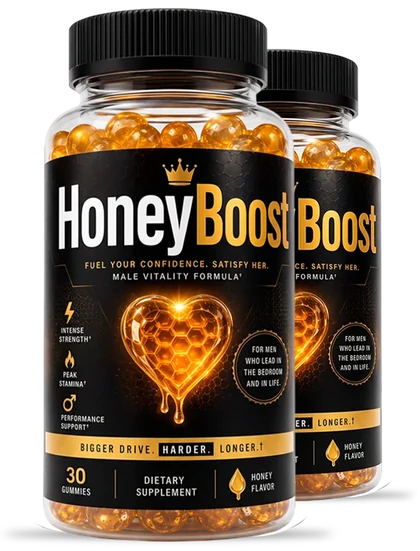
HoneyBoost: 30 gummies a bottlePacks of 2, 3 or 6 bottles · confirm the price at checkout · 60-day money-back (confirm live policy)
See packsWhat are the cautions?
Who should ask a clinician or pharmacist first.
Memorial Sloan Kettering reports a case of a 66-year-old man with heart failure who developed a fast, irregular heartbeat and other symptoms after taking Epimedium daily for two weeks. It lists sweating, feeling hot and mood changes as other possible effects, says toxicity and safety data are lacking, and advises caution in hormone-sensitive cancers because of estrogenic effects. Icariin may also interfere with aromatase inhibitor medicines (MSK, Epimedium).
A short list of who should ask first: people on nitrates or other heart medicine, on blood pressure medicine, on ED drugs, on MAO inhibitors or Parkinson medicine, on diabetes medicine (damiana may affect blood sugar), on aromatase inhibitors or other hormone or cancer medicine, and on tetracycline or quinolone antibiotics (zinc can lower their absorption). People with heart disease, a hormone-sensitive condition, or a psychiatric condition should ask as well.
Stop and ask a clinician if a rash, swelling, a racing or irregular heartbeat, dizziness, a strong headache, stomach upset that does not pass, mood changes or trouble sleeping show up after you start. These are listed under the ingredients' cautions, and they are the reason the label tells you to speak to a physician. You can report a problem with any supplement to FDA through MedWatch (FDA, MedWatch).
What should you take away?
The label amount is small, no study tested the gummy, and your medicines come first.
A 2023 review of marketed ED supplements scored 25 products and found that 20 (80%) matched the criterion of no expected efficacy, mostly because ingredients were used at a negligible dose or without evidence (Petre et al. 2023). The same review found L-arginine, Panax ginseng and Tribulus terrestris could improve male sexual function in trials. HoneyBoost contains none of the last two and only a trace of the first.
See the other pages on ingredients, claims versus evidence and medicine safety. Order links go to the seller's checkout.
FAQ01
HoneyBoost questions people ask
How much horny goat weed is in HoneyBoost?
10 mg of Epimedium extract 8:1 per gummy, equal to 80 mg of plant.
Is there a human trial?
Memorial Sloan Kettering cites none for sexual function.
What is icariin?
The main studied compound. The label prints no percentage.
Is it like Viagra?
A lab study found it blocks the same enzyme, far more weakly, in a dish. It is not a drug and no human dose is established.
What are the cautions?
A heart rhythm case report, estrogenic effects and a possible aromatase inhibitor interaction.
Who should avoid it?
People with heart failure or hormone-sensitive conditions unless a clinician agrees.
Who wrote this02
Written and reviewed by
Pages built from the label images, seller information and linked NIH, FDA, CDC, FTC and peer-reviewed sources.
Last updated . Read our editorial standards and how we check reviews. This website is the information site for a U.S. authorized retailer (a licensed U.S. retail desk) for HoneyBoost. It is not the manufacturer or the distributor named on the label. We earn money when you buy through our order links.
Keep reading
More about HoneyBoost
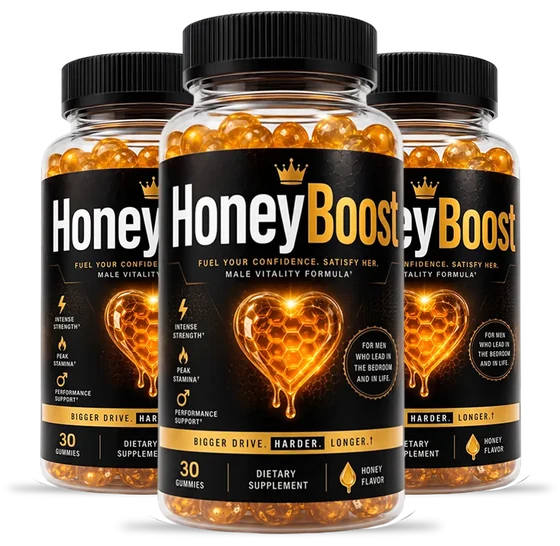
Licensed U.S. retail desk for HoneyBoost
Ready to look at HoneyBoost?
Check your medicines first, read the directions on the bottle that arrives, then pick a pack of 2, 3 or 6 bottles. The checkout shows the live price, any shipping and the guarantee.
- Checkout runs on the sales site
- 60-day money-back (confirm live policy)
- Ships from the U.S.