 Label
Product information
Maca in HoneyBoost: 10 mg of Root Extract, Beside the Trials
HoneyBoost lists maca root extract 10:1 at 10 mg per gummy, equal to 100 mg of root. Small trials used 1,500 to 3,000 mg of powder or 2,400 mg of extract a day. Evidence is limited, and no trial tested this gummy.
Written by the HoneyBoost label deskUpdated
What does HoneyBoost say about Maca?
The label line, the studied amount and the caution, in one place.
| Name on the label | Maca (Lepidium meyenii) Root Extract 10:1 |
|---|---|
| What it is | Lepidium meyenii, a root of the Peruvian highlands |
| Place on the panel | Line 1 of the six extract and amino acid lines |
| Amount per gummy | 10 mg per gummy, equivalent to 100 mg maca root, printed on the label |
| Amount used in research | 2,400 mg a day of a dry extract for 12 weeks (mild ED); 1,500 to 3,000 mg a day of gelatinized maca for 12 weeks (desire in healthy men) |
| Strength of evidence | Limited: four small trials in a 2010 review; no change in testosterone in the men's trial |
| Marketed or traditional use | Traditionally eaten as a food and marketed for energy and sexual wellbeing |
| Main caution | Tell a clinician if you have a hormone-sensitive cancer, and before testosterone lab tests (maca may interfere with immunoassays) |
Maca (Lepidium meyenii) is a root vegetable grown in the high Andes of Peru. People eat it as a food and sell it as a powder or extract for energy and sexual wellbeing. Memorial Sloan Kettering notes that only a few small trials have been run in people (MSK, Maca). That is the starting point for any claim about maca in a gummy.
The HoneyBoost panel lists "Maca (Lepidium meyenii) Root Extract 10:1" at 10 mg per gummy, with a note that it is equivalent to 100 mg of maca root. The 10:1 ratio is the seller's way of saying ten parts of root were used for one part of extract. It does not tell you how much of any active compound is in the gummy, and maca extracts differ a lot between makers.
What does the research say?
What exists, at what dose, and how it compares with the gummy.
The best-known human data are small. In a 2002 trial of healthy men aged 21 to 56, 1,500 or 3,000 mg a day of gelatinized maca for 12 weeks was linked to higher self-rated sexual desire from week 8, while blood testosterone and estradiol did not differ from placebo (Gonzales et al. 2002). In a 2009 trial of 50 men with mild erectile dysfunction, 2,400 mg a day of a dry maca extract for 12 weeks improved a questionnaire score by 1.6 points against 0.5 for placebo (Zenico et al. 2009). A 2010 review of four randomized trials called the evidence limited (Shin et al. 2010).
Set the label beside those studies. One gummy has 10 mg of extract. The mild ED trial used 2,400 mg a day, which is 240 times more. Even the "100 mg root equivalent" is only about 3% to 7% of the 1,500 to 3,000 mg of maca powder in the desire trial. A gummy would need to be taken in very large numbers to reach a studied amount, and nobody should do that. The honest reading is that no trial tested this product.
Maca extract
the studied amount is 240 times the label amountLabel: 10 mg per gummy. Studied: Dry extract, 2,400 mg a day for 12 weeks in men with mild ED. (Zenico et al. 2009)
Tongkat ali extract
the studied amount is 4 times the label amountLabel: 25 mg per gummy. Studied: Standardized root extract, 100 to 600 mg a day, mostly one branded extract. (Leisegang et al. 2022)
L-arginine
the studied amount is 500 times the label amountLabel: 10 mg per gummy. Studied: 5,000 mg (5 g) a day for 6 weeks in men with organic ED. (Chen et al. 1999)
Zinc
the studied amount is 4.4 times the label amountLabel: 2.5 mg per gummy. Studied: The adult male RDA and label Daily Value is 11 mg a day (not a study dose). (NIH ODS, Zinc)
Label amount, per gummyAmount used in the study (or the daily need, for zinc)
Log scale: each step to the right is ten times more. The label does not say how many gummies make a day, so one gummy is shown. A studied dose says what was tested, not what works for you, and no study tested HoneyBoost. Horny goat weed, damiana and mucuna are left out because we found no human dose that can be set beside the label.
What forms of maca are sold?
Maca comes as raw powder, gelatinized powder, extract and capsule or gummy blends.
Raw maca powder is the root ground up. Gelatinized maca is heated to remove starch, which is easier to digest and is the form used in the 2002 trial of healthy men (Gonzales et al. 2002). An extract such as 10:1 is a concentrate. The colors, red, black and yellow, are different root types, and a few small studies compare them. The HoneyBoost label does not say which color or which part of the root, so it cannot be matched to a trial.
A 10:1 label also depends on the maker's method. Two 10:1 extracts can differ in what they hold, because the ratio describes the recipe and not the result.
Is maca also a food?
Yes. Maca is eaten as a root vegetable in the Peruvian highlands.
As a food, people eat many grams at a time, baked, boiled or ground into flour. That is far more than a 100 mg root equivalent. It also means maca has a long record of use as food, which is a different thing from a record as a concentrated supplement for sexual function. A food history supports the idea that maca is not toxic at ordinary amounts. It does not show a benefit.
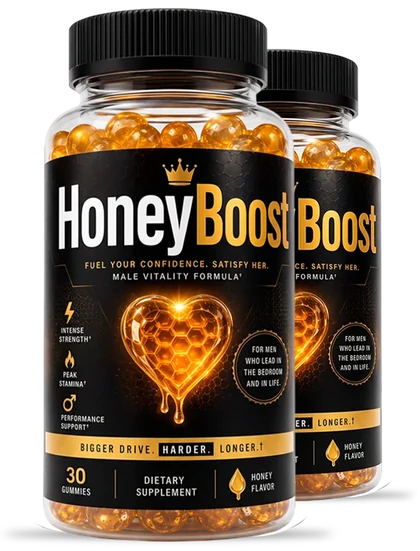
HoneyBoost: 30 gummies a bottlePacks of 2, 3 or 6 bottles · confirm the price at checkout · 60-day money-back (confirm live policy)
See packsWhat are the cautions?
Who should ask a clinician or pharmacist first.
Memorial Sloan Kettering lists no firm side effect for maca in the patient section, and notes that maca may interfere with testosterone immunoassays, so tell your clinician before a hormone blood test. People with a hormone-sensitive cancer should ask their care team first (MSK, Maca). Reports in the clinician section include cramps, mood changes, stomach upset and trouble sleeping.
A short list of who should ask first: people on nitrates or other heart medicine, on blood pressure medicine, on ED drugs, on MAO inhibitors or Parkinson medicine, on diabetes medicine (damiana may affect blood sugar), on aromatase inhibitors or other hormone or cancer medicine, and on tetracycline or quinolone antibiotics (zinc can lower their absorption). People with heart disease, a hormone-sensitive condition, or a psychiatric condition should ask as well.
Stop and ask a clinician if a rash, swelling, a racing or irregular heartbeat, dizziness, a strong headache, stomach upset that does not pass, mood changes or trouble sleeping show up after you start. These are listed under the ingredients' cautions, and they are the reason the label tells you to speak to a physician. You can report a problem with any supplement to FDA through MedWatch (FDA, MedWatch).
What should you take away?
The label amount is small, no study tested the gummy, and your medicines come first.
A 2023 review of marketed ED supplements scored 25 products and found that 20 (80%) matched the criterion of no expected efficacy, mostly because ingredients were used at a negligible dose or without evidence (Petre et al. 2023). The same review found L-arginine, Panax ginseng and Tribulus terrestris could improve male sexual function in trials. HoneyBoost contains none of the last two and only a trace of the first.
See the other pages on ingredients, claims versus evidence and medicine safety. Order links go to the seller's checkout.
FAQ01
HoneyBoost questions people ask
How much maca is in HoneyBoost?
10 mg of maca root extract 10:1 per gummy, equal to 100 mg of root.
Does maca raise testosterone?
In a 2002 trial of healthy men it did not change testosterone.
What dose did trials use?
1,500 to 3,000 mg a day of powder, or 2,400 mg of dry extract.
Is maca safe?
Memorial Sloan Kettering lists no firm side effect, and notes it may affect testosterone lab tests.
Which maca color is it?
The label does not say.
Who should ask first?
People with hormone-sensitive cancer, and anyone about to have a hormone blood test.
Who wrote this02
Written and reviewed by
Pages built from the label images, seller information and linked NIH, FDA, CDC, FTC and peer-reviewed sources.
Last updated . Read our editorial standards and how we check reviews. This website is the information site for a U.S. authorized retailer (a licensed U.S. retail desk) for HoneyBoost. It is not the manufacturer or the distributor named on the label. We earn money when you buy through our order links.
Keep reading
More about HoneyBoost
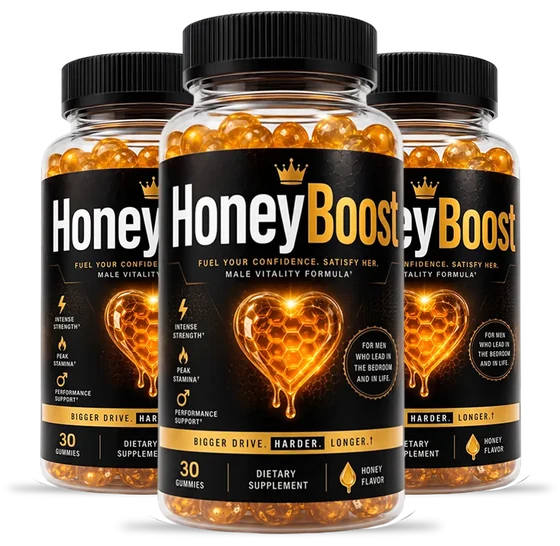
Licensed U.S. retail desk for HoneyBoost
Ready to look at HoneyBoost?
Check your medicines first, read the directions on the bottle that arrives, then pick a pack of 2, 3 or 6 bottles. The checkout shows the live price, any shipping and the guarantee.
- Checkout runs on the sales site
- 60-day money-back (confirm live policy)
- Ships from the U.S.