 Label
Product information
HoneyBoost Guides: Men's Supplement Basics, Without the Hype
Seven short guides on the topics that surround HoneyBoost: testosterone boosters, erectile dysfunction basics, tainted enhancement products, enhancement gummies, how to judge a label, healthy habits and scam red flags. Each links to public sources and says where evidence ends.
Written by the HoneyBoost label deskUpdated
Where should you start?
Start with the guide that matches your question.
The guides are for men who search for a supplement and want to know what to believe. They cover the wider subject, not just HoneyBoost, and each one ends by pointing back to the label facts. Read them in any order, and feel free to skip the ones that do not apply to you. If you have only a few minutes, start with tainted products, since hidden drugs are the best documented risk in this category, and then how to judge a label.
What guides are there?
Seven guides, each answering one question.
| Guide | Question it answers | Read when |
|---|---|---|
| Testosterone boosters | Do they work, and are they safe? | A product says it supports testosterone |
| ED basics | What is it and what causes it? | You or a partner see erection trouble |
| Tainted products | What has FDA found? | Before any enhancement purchase |
| Enhancement gummies | What do label and studies show? | You are comparing gummies |
| Men's supplements | How to judge a label | You are comparing any two products |
| Healthy habits | What has the best record? | You want steps with evidence |
| Scam red flags | How to spot a bad seller | Before you enter a card number |
How do the guides work?
Each guide starts with a short answer, uses public sources and ends with what to do next.
We link FDA, NIH, NIDDK, Mayo Clinic, Memorial Sloan Kettering and journal papers, at most a few per section. Where a source is missing, we say so. Where a number comes from the HoneyBoost label, we say that too. We keep the same cautions on every guide: check your medicines, see a clinician for symptoms, and never treat a supplement as a substitute for care. Every guide also names the studies behind its numbers, so that you can open the source and read the abstract yourself if you want to check us.
Each page cites public sources: FDA, NIH, NCCIH, the FTC, Memorial Sloan Kettering and papers indexed in PubMed. We link at most three sources in a section and ten on a page, and any other source is named in plain text. If you find an error, write to the contact address and we will fix it.
What do all the guides agree on?
Five rules.
- A supplement label is not a lab result.
- A dose in a study is the dose that matters.
- A claim that sounds like a drug effect deserves a drug-level source.
- A hidden-drug risk is real in this category.
- Symptoms need a clinician, not a gummy.
In the U.S., FDA treats dietary supplements as a kind of food, not a drug. FDA does not approve a supplement before it is sold, and the maker is responsible for safety and for truthful labeling (FDA, FDA 101: Dietary Supplements). A structure or function claim is allowed if the label also says FDA has not evaluated it and that the product is not meant to treat, cure or prevent disease (FDA, Structure/Function Claims).
How do the guides relate to HoneyBoost?
They give context for the label.
HoneyBoost is one product in a crowded category. Reading about the category helps you judge it fairly, in both directions. A guide on testosterone boosters shows why we do not say the gummy raises testosterone. A guide on tainted products shows why we repeat the medicine cautions. A guide on habits shows what has a record. Our label pages, supplement facts and ingredients, give the specifics.
This site is an information site for a U.S. authorized retailer, not the manufacturer. We do not make HoneyBoost, we do not test it in a lab and we cannot see inside a bottle. We write down what the label images and the seller brief print, set them beside public sources, and say plainly where the two do not meet.
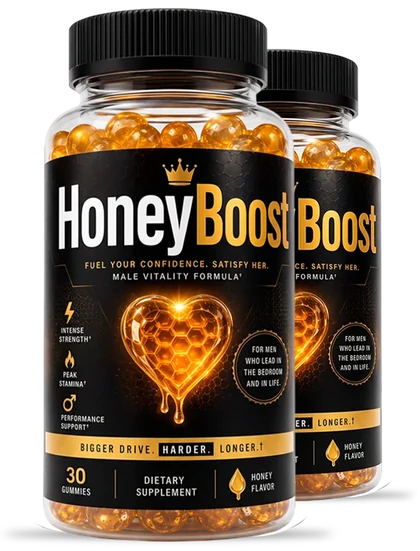
HoneyBoost: 30 gummies a bottlePacks of 2, 3 or 6 bottles · confirm the price at checkout · 60-day money-back (confirm live policy)
See packsWhat terms do the guides use?
Twelve words that come up often, in plain English.
| Term | Plain meaning |
|---|---|
| Dietary supplement | A product taken by mouth that is not a drug and is sold under FDA food rules |
| Extract ratio | How much raw plant went into the extract, such as 10:1 |
| Standardized extract | An extract adjusted to a set amount of a marker compound |
| Daily Value | A reference amount used for the percent on a label |
| RDA | The daily nutrient amount that meets the needs of most healthy people |
| Upper limit | The most of a nutrient that is unlikely to cause harm |
| PDE5 | The enzyme blocked by prescription ED drugs such as sildenafil |
| Nitrate | A heart medicine used for chest pain that can interact dangerously with ED drugs |
| L-DOPA | The compound the body turns into dopamine; the drug levodopa |
| MAO inhibitor | A medicine class used for depression and Parkinson disease |
| Placebo | A look-alike with no active ingredient, used in trials |
| Hypogonadism | Low testosterone with symptoms, diagnosed by a clinician |
Each term is used in the guides and on the label pages. If a word is not here, ask your pharmacist, who can explain it in the context of your medicines.
Who are the guides for?
Adult men, and partners, who want a straight answer.
You may be reading because you saw an ad, because a friend recommended something or because you are worried about a change in your body. The guides assume no medical background. They aim to be calm, and to give you the questions to bring to a clinician. They do not aim to scare you, or to sell you. A partner reading over your shoulder should find nothing embarrassing, and nothing that overpromises either.
A clinician can check blood pressure, blood sugar, cholesterol, testosterone and your medicines, and can offer proven treatments such as prescription medicines or counseling. The Mayo Clinic describes these steps and lifestyle changes that help many men (Mayo Clinic, Erectile Dysfunction). A supplement is not on that list.
How often are the guides updated?
When the sources change.
FDA updates its tainted products list, journals publish new reviews, and agencies revise pages. We check the guides when we update the site, and the date at the top shows the last change. If you see something out of date, email [email protected].
We earn a commission when you buy through our links. That is a conflict of interest, and we list it on every page. It does not change what the label says, and it is why every claim on this site is checked against a public source and why we do not write that the product works.
If something goes wrong, tell your clinician first, keep the bottle and its lot code, and report the event to FDA at MedWatch (FDA, MedWatch). A report helps FDA spot patterns, such as hidden drugs, that a single buyer cannot see. Also tell the seller, whose order desk number is on the contact page.
What mistakes do the guides try to prevent?
Four common ones.
| Mistake | Why it happens | Fix |
|---|---|---|
| Buying on a tagline | Words like strength and stamina sound like facts | Read the amounts and the studies |
| Ignoring medicines | A supplement feels like food | Ask a pharmacist |
| Trusting reviews | They look like proof | Check the FTC rule and the source |
| Skipping the check-up | A pill seems easier | A clinician looks at the cause |
FAQ01
HoneyBoost questions people ask
Where do I start?
With the tainted products guide, then how to judge a label.
Are the guides medical advice?
No. They are general information with sources.
Do the guides recommend HoneyBoost?
No. They give context so you can judge the label.
Who reviews them?
A clinician reviewer slot, empty until signed.
Do they cover other brands?
We do not name other products.
Can I suggest a topic?
Yes. Email the web inbox.
Who wrote this02
Written and reviewed by
Pages built from the label images, seller information and linked NIH, FDA, CDC, FTC and peer-reviewed sources.
Last updated . Read our editorial standards and how we check reviews. This website is the information site for a U.S. authorized retailer (a licensed U.S. retail desk) for HoneyBoost. It is not the manufacturer or the distributor named on the label. We earn money when you buy through our order links.
Keep reading
More about HoneyBoost
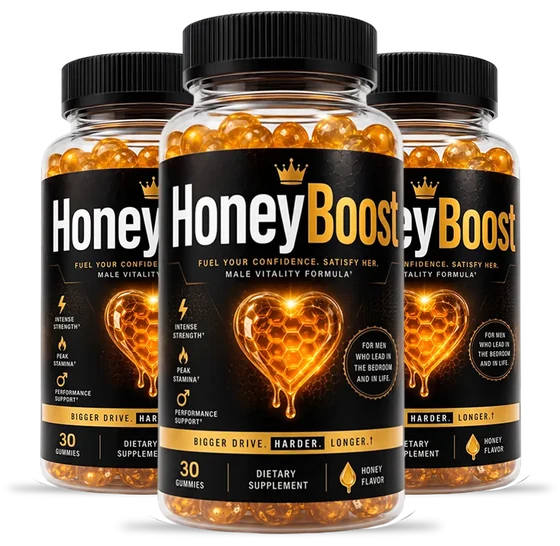
Licensed U.S. retail desk for HoneyBoost
Ready to look at HoneyBoost?
Check your medicines first, read the directions on the bottle that arrives, then pick a pack of 2, 3 or 6 bottles. The checkout shows the live price, any shipping and the guarantee.
- Checkout runs on the sales site
- 60-day money-back (confirm live policy)
- Ships from the U.S.