 Label
Product information
HoneyBoost Sugar and Calories: 3 g of Added Sugar in Each Gummy
Each HoneyBoost gummy has 10 calories, 3 g of carbohydrate and 3 g of added sugar, which is 6% of the Daily Value. That is small, but it adds up with other foods. The American Heart Association suggests about 9 teaspoons of added sugar a day at most for men.
Written by the HoneyBoost label deskUpdated
How much sugar is in a HoneyBoost gummy?
Each gummy has 3 g of sugar, all of it added, and 10 calories.
The panel shows total carbohydrate 3 g (1% Daily Value), total sugars 3 g and "Includes 3 g Added Sugars" at 6% of the Daily Value. FDA sets the Daily Value for added sugars at 50 g a day (FDA, Added Sugars on the Nutrition Facts Label). Three grams is 6% of that, which matches the label.
- 3 gadded sugar
- 12 calfrom that sugar
- 12%of the 100-calorie limit for most women
- 8%of the 150-calorie limit for men
AHA limits: no more than 100 calories (about 6 teaspoons) of added sugar a day for most women and 150 calories (about 9 teaspoons) for men (AHA, Added Sugars). Calories here are grams x 4, our arithmetic. Other foods and drinks count too.
The slider counts gummies against the American Heart Association limit.
How does that compare with daily limits?
One gummy is small. Many gummies, plus your other sugar, is not.
The label shows 3 g of added sugar in each gummy, 6% of the Daily Value. That is small beside a soda, but it adds up with other foods. The American Heart Association suggests no more than about 9 teaspoons (150 calories) of added sugar a day for most men (AHA, Added Sugars). People who watch blood sugar should count it.
| Gummies | Added sugar | Calories from it (x4) | Share of 150-cal limit |
|---|---|---|---|
| 1 | 3 g | 12 | 8% |
| 2 | 6 g | 24 | 16% |
| 3 | 9 g | 36 | 24% |
| 5 | 15 g | 60 | 40% |
| 10 | 30 g | 120 | 80% |
The calories column is our own arithmetic (grams times four), shown so you can see how quickly small numbers add up across a week or a month. The label rounds each gummy to 10 calories. The label gives no directions, so the number you take is the number on your bottle.
What else is in the gummy base?
Sugar and corn syrup lead the other-ingredients list.
The other ingredients are sugar, corn syrup, water, pectin, citric acid, natural flavor, guar gum, tapioca starch, sodium citrate and artificial color. No honey is listed, so the honey in the name and the honey flavor on the label are not backed by a honey ingredient we can see. The label does not print the amount of any other ingredient.
A gummy is a candy-like format. It carries sugar and a gelling agent, and each piece can hold only a small amount of active material, so large doses need many pieces. HoneyBoost's gummy weighs 4.2 g, and its six active-type lines add up to 75 mg, under 2% of the weight.
Who should count the sugar?
Anyone watching blood sugar, weight or teeth.
People with diabetes or prediabetes have the clearest reason. Damiana may also affect blood sugar (MSK, Damiana), and the sugar in the gummy adds glucose on top. Ask your diabetes team before using it. People who limit sugar for weight or dental reasons should count it as they would candy. And parents should keep the jar out of reach, since it looks like candy. Finally, anyone who eats sticky sweets between meals knows they cling to teeth, so a quick rinse or brush after a gummy is a cheap habit.
Does the honey flavor mean honey?
No. Honey is not on the ingredient list.
Honey in the name is a flavor and a brand word. The ingredient list has sugar, corn syrup, water and pectin and does not list honey. Separately, FDA has warned about honey-based sexual enhancement products that hide drugs (FDA, Tainted Honey-based Products). Those are a different kind of product, which is why we keep the two apart.
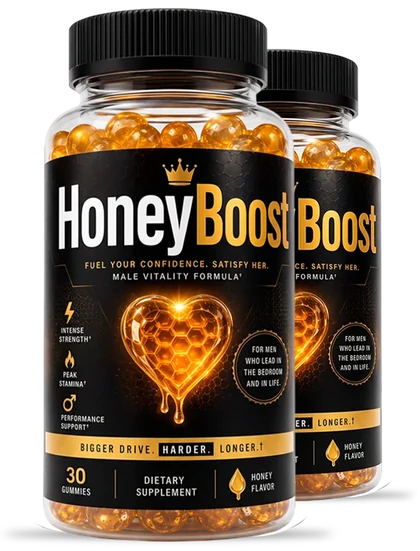
HoneyBoost: 30 gummies a bottlePacks of 2, 3 or 6 bottles · confirm the price at checkout · 60-day money-back (confirm live policy)
See packsWhy does added sugar matter at all?
Because most adults eat more of it than they think, and it adds calories without nutrients.
The American Heart Association links a diet high in added sugars to extra weight, high blood pressure and heart disease, and it counts sugar added by a maker the same as sugar added at home (AHA, Added Sugars). FDA put added sugars on the Nutrition Facts label so shoppers can see them (FDA, Added Sugars on the Nutrition Facts Label). A gummy has a label line for it, which is why HoneyBoost shows 3 g and 6%.
For one gummy a day, the sugar is a small number. The point is not alarm. It is that a daily supplement should be counted with the rest of the day, and that "a little" repeated is still a little more each day.
How does the sugar in a gummy compare with the plants in it?
By weight, the sugar is the biggest active-looking number on the panel.
The six extract and amino acid lines add up to 75 mg a gummy. The added sugar is 3 g, which is 3,000 mg. The sugar is 40 times heavier than all six lines put together. That is not a flaw in this product; it is how gummies work, because the base has to hold the shape. But it reframes the picture. When you eat a HoneyBoost gummy, you are eating mostly sugar, corn syrup and pectin, with a small amount of everything else.
The HoneyBoost label shows a dietary supplement in gummy form. A bottle holds 30 gummies, and a serving is 1 gummy (4.2 g), so there are 30 servings per container. Each gummy has 10 calories, 3 g of carbohydrate and 3 g of added sugars. The panel then lists zinc and six extract or amino acid lines. The label names no medical condition, and it prints no directions or suggested use.
How can you cut the sugar load?
Count it, and do not stack it.
- Count gummies against the number on your bottle.
- Skip another sweet treat on the same day.
- Brush or rinse after eating a gummy, since sticky candy clings to teeth.
- Choose a sugar-free option, or no supplement, if sugar is a concern.
- Ask a clinician if you have diabetes.
A gummy is a convenient format, not a requirement, and a supplement does not have to be sweet to be taken. If sugar matters to you, the other forms on the gummy form page are worth a look.
Keep the bottle out of the reach of children. Gummies look like candy, and the plant extracts and the L-DOPA source in them are not meant for a child. Store the bottle where a child cannot reach it.
The gummies are packaged in a facility that also handles peanuts, tree nuts, wheat, soy and milk. The label does not list them as ingredients, so this is a cross-contact notice. If a food allergy is serious, ask the seller and your allergist before you buy.
FAQ01
HoneyBoost questions people ask
How much sugar is in HoneyBoost?
3 g of added sugar per gummy, which is 6% of the Daily Value.
How many calories?
10 per gummy.
Is HoneyBoost keto friendly?
Each gummy has 3 g of carbohydrate. Whether that fits your plan depends on how many you take. Ask a dietitian.
Is it safe for diabetics?
Ask your diabetes team first. The sugar counts, and damiana may affect blood sugar.
Does it have artificial sweeteners?
None are listed. The label lists artificial color.
What is the Daily Value for added sugar?
FDA uses 50 g a day.
Who wrote this02
Written and reviewed by
Pages built from the label images, seller information and linked NIH, FDA, CDC, FTC and peer-reviewed sources.
Last updated . Read our editorial standards and how we check reviews. This website is the information site for a U.S. authorized retailer (a licensed U.S. retail desk) for HoneyBoost. It is not the manufacturer or the distributor named on the label. We earn money when you buy through our order links.
Keep reading
More about HoneyBoost
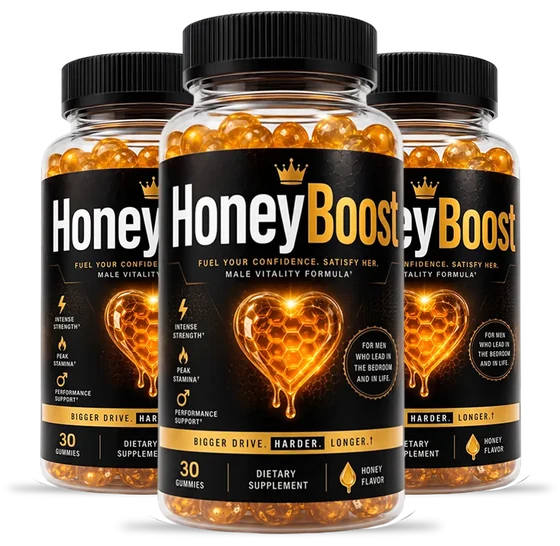
Licensed U.S. retail desk for HoneyBoost
Ready to look at HoneyBoost?
Check your medicines first, read the directions on the bottle that arrives, then pick a pack of 2, 3 or 6 bottles. The checkout shows the live price, any shipping and the guarantee.
- Checkout runs on the sales site
- 60-day money-back (confirm live policy)
- Ships from the U.S.